Why Rust solo survival beats group play and how one player holds an OP monument alone
Need articles like this for your video? They help promote it on YouTube and Google — order them in the Telegram bot @sat_sit_bot. The bot writes and publishes the articles itself (with your YouTube video embedded) on popular topical websites (no ads). Free trial — 50 articles.
· based on the channel Blooprint
Key takeaways
- Solo Rust means one player against groups of two to four on the same wipe, with no teammate to cover a respawn or a raid defense.
- Holding a monument alone works only with pre-stocked supplies: meds, ammo, repair materials and a fallback bag placed before the fight starts.
- Raid defense as a solo is mostly information: hearing the first explosive, knowing which wall is weakest and having loot split across more than one base.
- Friendly neighbors are a real asset — a good one can call out a raid, share a fight or trade sulfur, and costs nothing to keep.
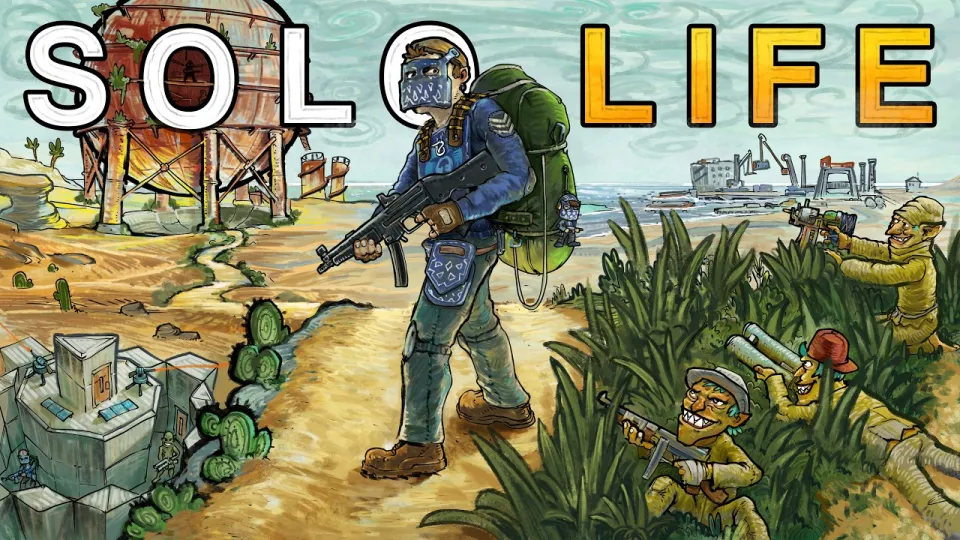
- Blooprint's The Solo Life V16 continues the solo series after A Solo's Journey 4, and the format stays: monument control, online raids and neighbor diplomacy.
Rust solo survival works because a lone player trades raw numbers for information, preparation and mobility — one player who knows the map, keeps spare kits and picks fights on their own terms can hold a monument and survive a raid defense against a group. Blooprint's The Solo Life V16 is built around exactly that: one player holding an OP monument while several angry neighbors try to push him off it. Anyone who wants the same tools can start with the free War Thunder bonus via the sponsor registration link the channel uses, though the Rust lessons below are the part that transfers to a real wipe.
What solo Rust actually demands compared to group play
Solo Rust is a different game from group play because every mistake lands on one person. A group can lose a member, respawn them at a nearby bag and keep pressure on a monument; a solo who dies at the wrong moment loses the fight, the loot and often the base. That asymmetry explains why solo content stays popular — the tension is real, and viewers who play alone recognize every decision.
The practical differences that matter most:
- Respawn economy. A solo needs bags placed before a fight, not during it. One bag inside the base, one hidden near the monument, one at a secondary stash.
- Loot splitting. Groups store everything in one core. Solos should keep the important crates in a second, quieter base so a single raid does not end the wipe.
- Time budget. Farming, crafting and scouting compete for the same hours. A solo who spends two hours on a monument fight has two hours less for upkeep and sulfur.
- Information over force. Knowing who lives nearby, which doors are offline and when a group logs off replaces the firepower a team brings.
Holding an OP monument as a lone player
Holding a monument alone is a supply problem before it is a shooting problem. Monuments with radiation, tight corridors and predictable entrances reward the player who arrived with more meds, more ammo and a plan for where to fall back. The fights in The Solo Life V16 revolve around that idea: the monument is valuable, but only if you can keep feeding it.
A workable checklist for a solo monument hold:
- Pre-place a fallback. A sleeping bag or stash a short run from the monument turns a death into a 40-second reset instead of a five-minute one.
- Carry for two engagements. Groups rotate players; a solo cannot. Extra meds and at least one spare weapon matter more than a third stack of loot.
- Use the terrain, not the doorway. Chokepoints favor the defender only when the defender is not the one being pushed from two sides.
- Leave before greed sets in. The moment a group starts arriving one after another, the monument has already paid out; staying converts profit into risk.
Comments on the video keep circling the same point — that the chaos looks relaxed on screen because the preparation happened off camera. That is the honest answer: the calm is bought with inventory management.
Raid defense when the neighbors arrive together
Raid defense as a solo is mostly an information contest. The first explosive tells you the direction, the second tells you the wall, and by the third you should already know whether you can win or whether you are buying time to move loot. Two solo players defending against a coordinated push is the scenario that shows this best, because both sides are improvising with limited manpower.
What consistently decides these fights:
- Hearing the raid early. A single rocket or C4 charge on the outer shell is a warning, not a loss. Use the seconds to grab a gun and a bag.
- Knowing your own base. Defenders who built the base know which wall is honeycombed and which is a shortcut. Attackers have to guess.
- Splitting the loot. If everything valuable sits behind one door, the raid only needs to reach one room.
- Picking the angle. Peeking from a position the attackers have not scouted beats pushing into a hallway where three players are already aiming.
The recurring viewer observation that a group wastes ten to twenty minutes chasing one solo is accurate — and it is the solo's best win condition. Time spent on you is time not spent on their own wipe.
Neighbors, accents and the social side of a solo wipe
Neighbors decide how a solo wipe goes, and the smart play is to keep at least one of them friendly. A good neighbor calls out a raid, trades sulfur, splits a fight or simply does not shoot you in the back while you farm. The Solo Life V16 leans into this: encounters with players from Argentina, Spain and elsewhere turn into running conversations rather than instant fights, and the chat notices how often those random meetings become the best part of the run.
Practical diplomacy for solos:
- Introduce yourself before you need help. A short voice chat at a monument is cheaper than a rocket later.
- Trade small and often. A stack of scrap or a spare gun buys more goodwill than a one-time large gift.
- Do not overcommit. Friendly does not mean trusted with your base location or your code lock.
- Expect the flip. The neighbor who helps during a raid defense may be the one online raiding you next week; keep the loot split anyway.
Common solo questions and how experienced players answer them
Solo doubts repeat across every wipe, and most of them come down to time and risk management rather than aim. The questions viewers raise around this series — how a solo holds ground, whether to duo up, why night fights feel impossible — have practical answers that do not require a team.
- "Should I just run a duo?" A duo halves the downtime and doubles the raid threat, but it also doubles the logistics. Many solos run one wipe as a duo and return to solo because the freedom matters more than the safety.
- "Why can I not see anything at night?" Because night in Rust is genuinely dark without a light source or night vision, and most clips are brightened in editing. Carry a flashlight or torch and accept that night is for farming, not fighting.
- "How do you stay calm during a raid?" By having already decided what you will do if the wall falls. A pre-planned fallback removes most of the panic.
- "Is holding a monument worth it as a solo?" Only with pre-stocked supplies and an exit plan; otherwise the monument holds you instead.
Useful links
- War Thunder free bonus, PC and consoles: https://wtplay.link/blooprint
- War Thunder free bonus, mobile: https://wtm.game/blooprint
- Blooprint on Twitch: https://www.twitch.tv/blooprint
- Blooprint on Kick: https://kick.com/blooprint
- Blooprint on TikTok: https://www.tiktok.com/@blooprintgames
Final thoughts on the solo life
Solo Rust rewards preparation far more than reflexes, and The Solo Life V16 shows the pattern clearly: stock the monument before the fight, split the loot before the raid, and keep one neighbor friendly. Blooprint's series works as a study in that discipline — the monument hold, the online raid defense and the improvised diplomacy all come from the same habit of planning one step ahead of a group that outnumbers him. If you want to support the channel and pick up a free bonus at the same time, use the War Thunder registration link.
Questions & answers
Is Rust playable as a pure solo player?
Yes, but the game changes shape. A solo has to trade group firepower for information, spare kits and a second stash, and should expect to lose bases rather than defend everything. The players who enjoy solo most are the ones who plan a fallback before every fight.
How does a solo player hold a monument against a group?
By arriving prepared and leaving early. Pre-place a bag near the monument, carry enough meds and ammo for two engagements, use terrain instead of doorways, and treat the monument as a payout to collect rather than a position to die for.
What is the best way to survive an online raid alone?
Hear the raid early, know which wall is weakest, and keep the valuable loot split across more than one room or base. Buying time is a win condition for a solo, since every minute attackers spend on you is a minute they lose elsewhere.
Should a solo player team up with a neighbor?
A friendly neighbor is one of the best assets on a solo wipe for callouts, trades and raid defense, but trust has limits. Keep base locations and codes private, trade small and often, and expect the relationship to flip eventually.
Source: Rust - THE SOLO LIFE V16 · Markdown version